

Ahsanullah University of Science and Technology (AUST) is currently in the process of implementing rooftop solar photovoltaic (PV) power systems as part of its commitment to sustainable energy transition, urban energy resilience, and reduced dependence on conventional grid electricity. In the context of Dhaka city, where electricity demand is high and grid reliability can be affected by peak-load stress and infrastructure constraints, on-site renewable energy generation plays an important role in enhancing energy security and operational continuity.

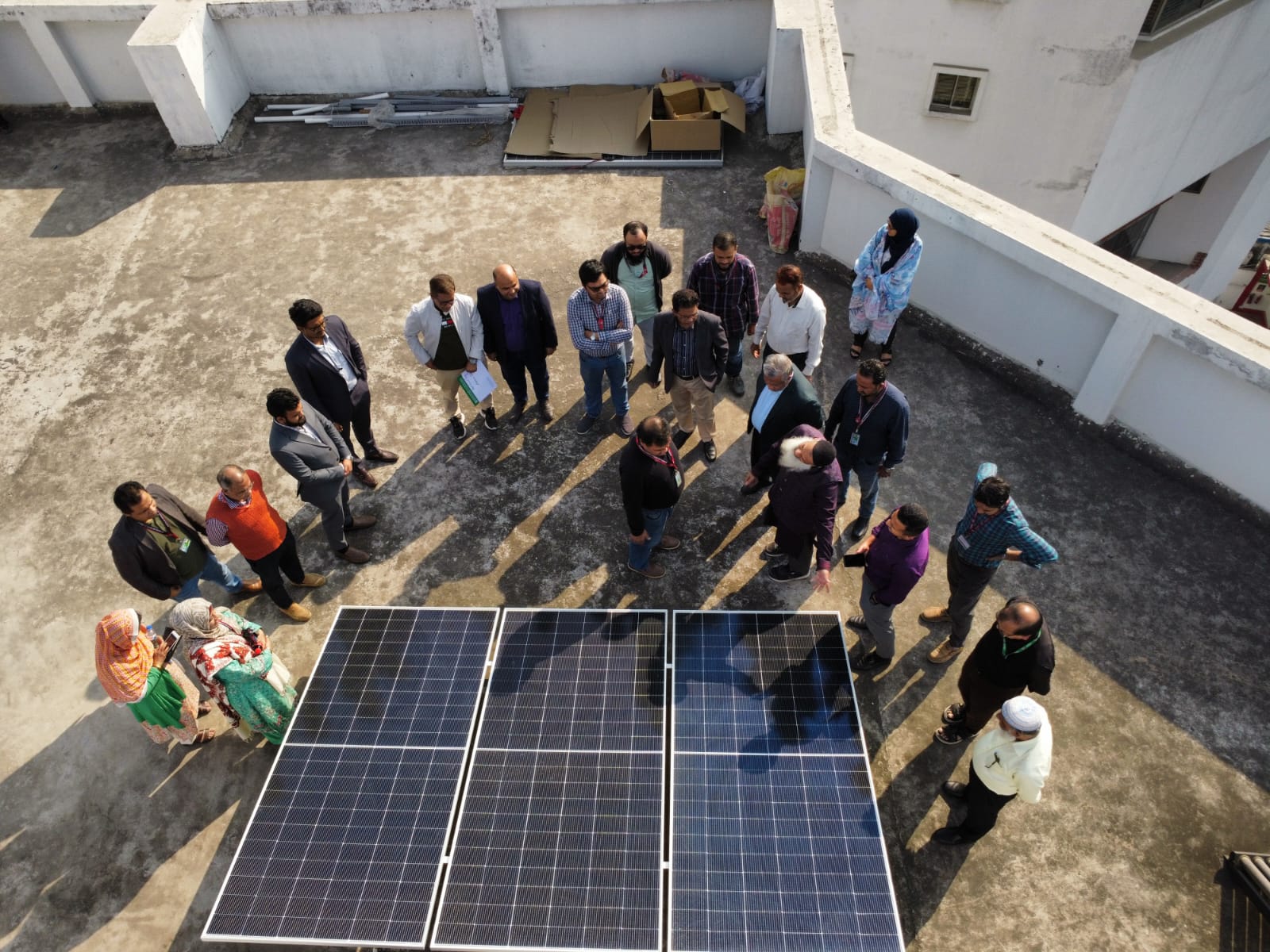
Based on the approved work order and Single Line Diagram (SLD) documents, AUST is implementing two rooftop solar PV systems installed on the rooftop of Block-A at the AUST Main Campus:
Among these, the 18.3 kWp grid-tied system has already been commissioned and is currently operational. The 3.05 kWp hybrid system is in the final stage of implementation and is expected to be commissioned soon, In Shaa Allah. Upon full commissioning, the total installed rooftop solar PV capacity at AUST will be 21.35 kWp, representing a practical and scalable step toward sustainable urban energy solutions in Dhaka.
The main rooftop installation at AUST is a grid-connected (on-grid) solar photovoltaic (PV) system designed to operate in parallel with the utility grid under a net-metering framework. This system supplies solar-generated electricity directly to campus loads during daytime operation, thereby reducing dependence on grid-supplied power during peak demand hours. Surplus energy generation may be exported to the utility grid through net metering, while any shortfall in solar generation is automatically met by the grid.
The grid-connected solar PV system supports load shaving and contributes to emission reduction by supplying clean electricity during daytime operation. Export of surplus energy through net metering improves grid efficiency and reduces fossil-fuel-based electricity generation at the city level.
From a sustainability and energy security perspective, this system:
The system has been designed and installed in compliance with relevant safety codes and standards, ensuring safe and reliable operation.
In addition to the grid-connected system, AUST is implementing a hybrid solar PV system with battery energy storage to enhance energy security and operational resilience. This system is intended to ensure continuity of selected critical academic and research loads, particularly during grid interruptions or voltage instability.
The hybrid system is capable of operating in solar-only, grid-assisted, or battery-backed modes, depending on grid availability and load conditions. During grid interruptions, the battery energy storage system will ensure uninterrupted power supply to designated critical loads, thereby supporting academic and research continuity.
From a sustainability and energy security perspective, this hybrid system:
The rooftop solar PV systems at AUST consist of both grid-connected and hybrid configurations, enabling a balanced approach toward clean energy generation and energy resilience.
The grid-connected system supports large-scale renewable energy integration and peak-load reduction, while the hybrid system with battery storage is designed to ensure uninterrupted power supply to critical facilities during grid disturbances.
The rooftop solar PV installations at AUST directly support Sustainable Development Goal 7 (SDG 7): Affordable and Clean Energy. These systems strengthen renewable energy use, energy reliability, and sustainable campus operations.
The rooftop solar PV systems at AUST function as a living laboratory, offering students and faculty practical exposure to renewable energy technologies, grid integration, hybrid systems, energy storage, and sustainable infrastructure planning. These installations support AUST’s commitment to sustainability and climate-conscious education.
The rooftop solar PV systems contribute to:
The combined deployment of a grid-connected solar PV system and a hybrid battery-backed system enables AUST to achieve both energy efficiency and energy resilience. The grid-connected system delivers the primary share of renewable electricity and supports grid interaction, while the hybrid system will ensure uninterrupted power supply to critical loads during outages. This integrated approach reinforces AUST’s commitment to sustainable and secure energy use and provides a scalable foundation for future expansion of rooftop solar installations.
Prepared by: AUST Rooftop Solar Committee | February 2026
141 & 142, Love Road, Tejgaon Industrial Area, Dhaka-1208.
Tel. (8802) 8870422, Ext. 107, 114, Fax : (8802) 8870418
Email : info@aust.edu, regr@aust.edu