

Date: 2026-11-04
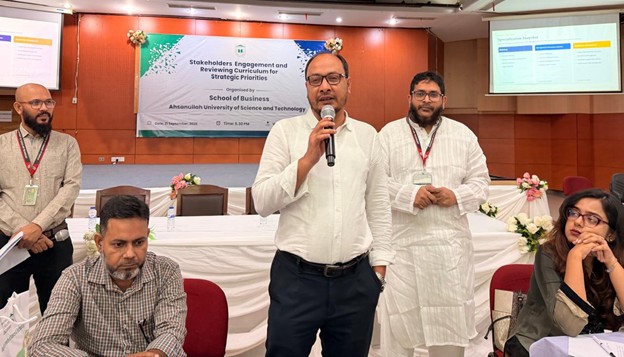
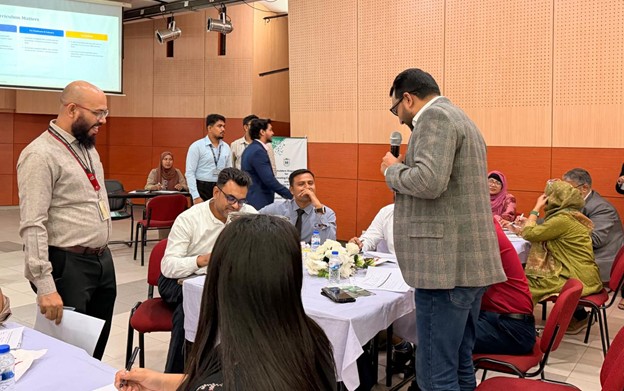
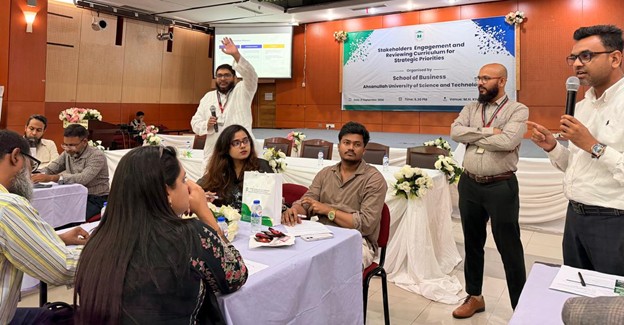
The School of Business (SoB), Ahsanullah University of Science and Technology (AUST), in collaboration with the Institutional Quality Assurance Cell (IQAC), organized a seminar titled “Stakeholder Engagement for Reviewing Curriculum and Strategic Priorities” on September 21, 2026. The seminar brought together distinguished industry professionals, academicians, alumni, and other respected stakeholders, including representatives of the AUST Alumni Association, to provide valuable insights for the continuous development of the School of Business. The seminar primarily focused on reviewing the existing academic curriculum, strengthening graduate attributes, and identifying strategic priorities in response to the evolving requirements of the business and corporate sectors. Stakeholders emphasized the need for a stronger alignment between academic learning and professional practice, particularly in the areas of emerging technologies, artificial intelligence (AI), digital transformation, business analytics, communication, leadership, and workplace readiness.
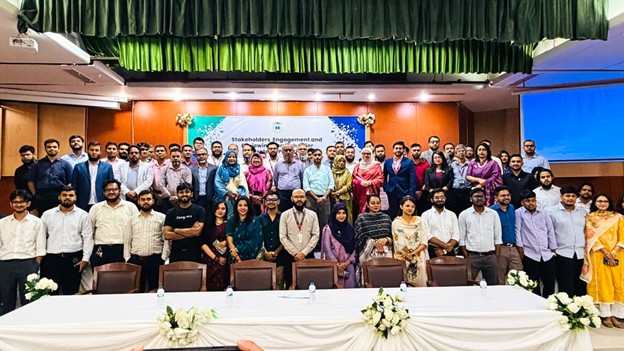
For curriculum redesign, participants recommended greater emphasis on practical and industry-oriented learning. They highlighted the integration of AI applications, Microsoft Excel, business analytics, digital accounting, contemporary business cases, industry-based projects, presentations, simulations, and practical assignments into relevant courses. Stakeholders also emphasized the importance of strengthening internship opportunities, industry visits, guest lectures, professional training, and other experiential learning activities. The curriculum should be reviewed regularly through structured consultation with industry professionals, alumni, and academic stakeholders to ensure continued relevance. The discussion also highlighted the need to strengthen the Graduate Attributes of SoB students. Graduates should possess not only sound theoretical knowledge but also AI and digital literacy, analytical and problem-solving abilities, effective communication, professional confidence, creativity, adaptability, teamwork, ethical responsibility, and lifelong learning capabilities. Particular attention was given to developing students’ ability to apply academic knowledge to real-world business situations and adapt to rapidly changing professional environments.
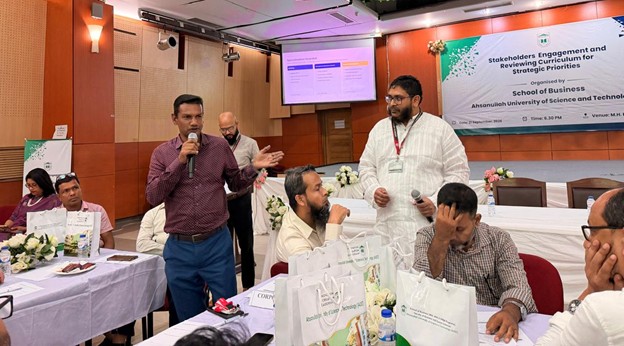
Regarding the Strategic Direction of the School, stakeholders recommended strengthening industry–academia collaboration through MoUs, internships, professional engagement, and joint initiatives. Continuous quality improvement, graduate employability, digital transformation, and regular stakeholder consultation were identified as important strategic priorities. The School may also explore and further strengthen specialized academic pathways in areas such as Tourism and Hospitality Management and Information & Technology Management, subject to appropriate academic review. The seminar provided valuable stakeholder perspectives that will contribute to the ongoing process of curriculum enhancement, graduate attribute development, and strategic planning of the School of Business. The recommendations will support SoB in strengthening academic quality and preparing competent, adaptable, technologically capable, and industry-ready graduates.
Faculty of Business and Social Sciences
Ahsanullah University of Science and Technology
141 & 142, Love Road, Tejgaon Industrial Area, Dhaka-1208
Tel. (8802) 8870422, Ext. 107, 114, Fax : (8802) 8870418
Email: info@aust.edu, regr@aust.edu