

Department of
Date: 2026-09-03
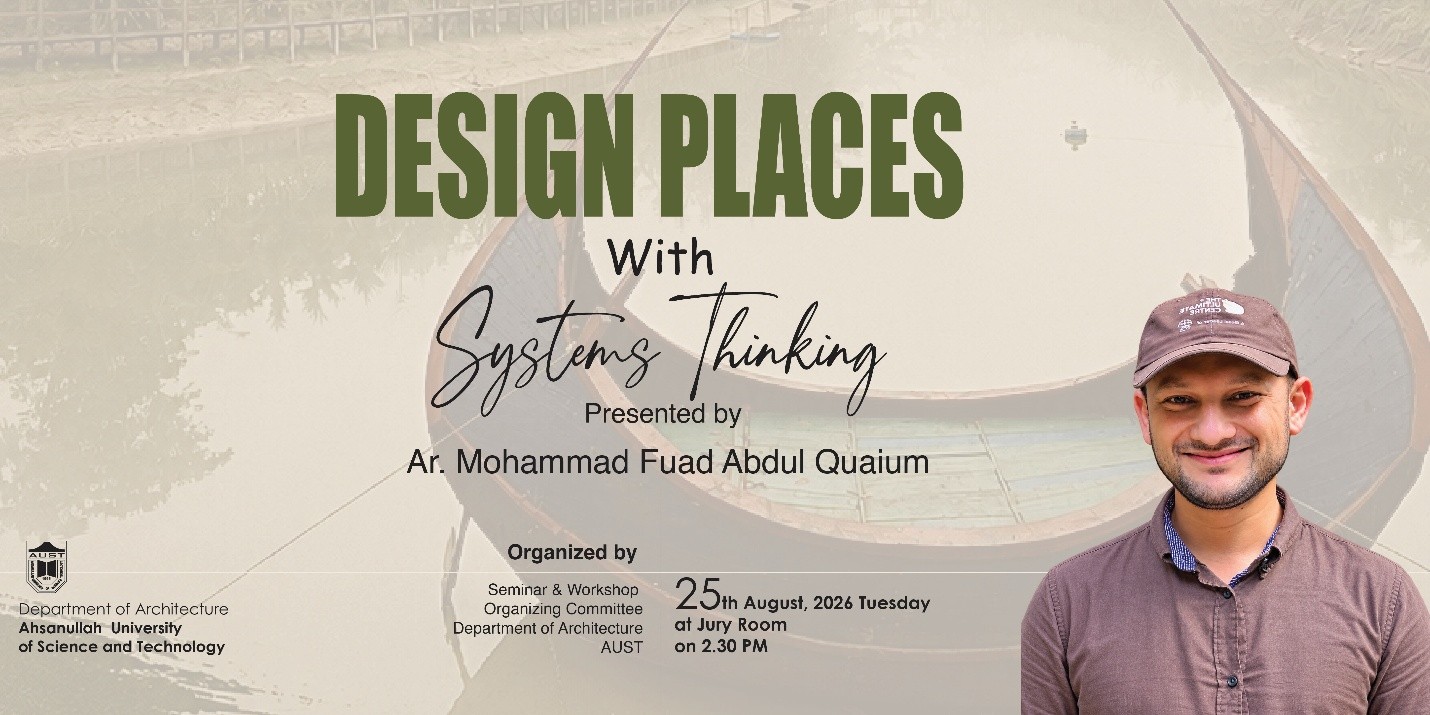
The Seminar and Workshop Organizing Committee, Department of Architecture, Ahsanullah University of Science and Technology (AUST), organized a seminar titled “Design Places with Systems Thinking” on 25th August, 2026 at the jury space. Architect and Eco-sensitive Landscape Planning-and-Design Consultant, Mohammad Fuad Abdul Quaium, shared his valuable insights in the seminar through selected projects in presence of the distinguished faculty members and students of the Department of Architecture. The seminar was conducted by Ar. Zareen Jahan Khan, Assistant Professor, Department of Architecture, AUST.
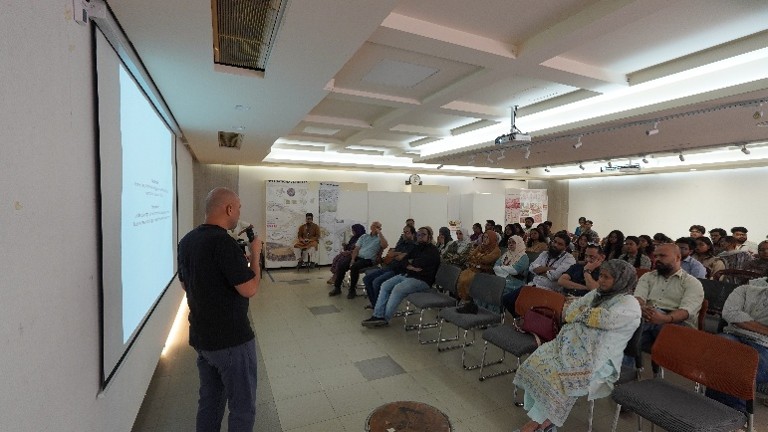
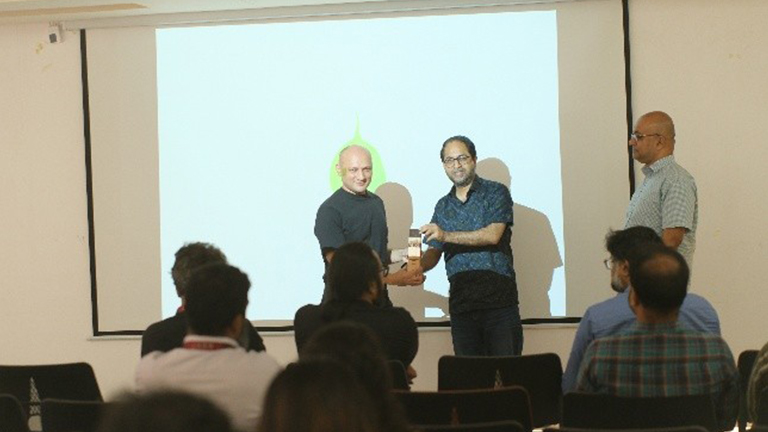
Ar. Fuad Quaium completed his Bachelor of Architecture from Bangladesh University of Engineering and Technology (BUET) in 2011. In 2012, he began his professional practice by co-founding GHORAMI.JON, where he explored the application of appropriate technologies and natural systems to enhance user comfort and environmental values. He currently serves as the Principal Architect of LIVING PLANNING, where these ideas continue to develop through a more holistic approach to design.
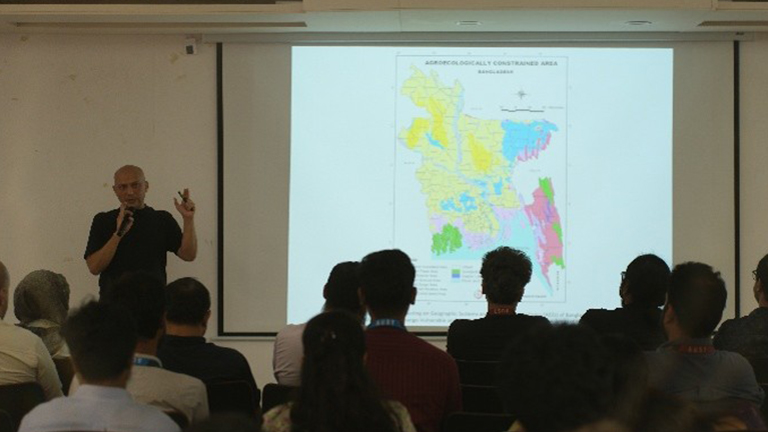
The seminar focused on systems thinking as a holistic approach to understanding the factors, interactions, and complexities that shape architectural outcomes. Through selected professional projects, Ar. Fuad Quaium demonstrated how project requirements, site conditions, stakeholders and contextual issues can inform a systems-level design response. Among the projects discussed was the CCDB Climate Technology Park at Sreepur, Gazipur, conceived around Bangladesh’s geographic and agro-ecological diversity, with distinct zones representing the Coastal, Dry, Char, Hilly-Area, and Haor regions. The project integrates climate adaptation and mitigation strategies, ecological sensitivity, productive landscapes, incremental development and low-maintenance approaches. It was a large-scale project that deals with both Macro and Micro scale climate as well as context. He also presented a small-scale project named Arannayk Foundation and GreenSpace Complex at Ukhiya, Cox’s Bazar, where modularity, standardization, design for disassembly, bioclimatic design, cultural and vernacular compatibility and landscape-integrated architecture were explored with responses to environmental, economic, and contextual requirements. In both projects, the speaker encouraged students to develop greater awareness of the site by carefully considering its topography and contextual characteristics. More specifically, the speaker emphasized the importance of understanding the functional and ecological significance of different tree species and identifying which trees are appropriate for specific uses.
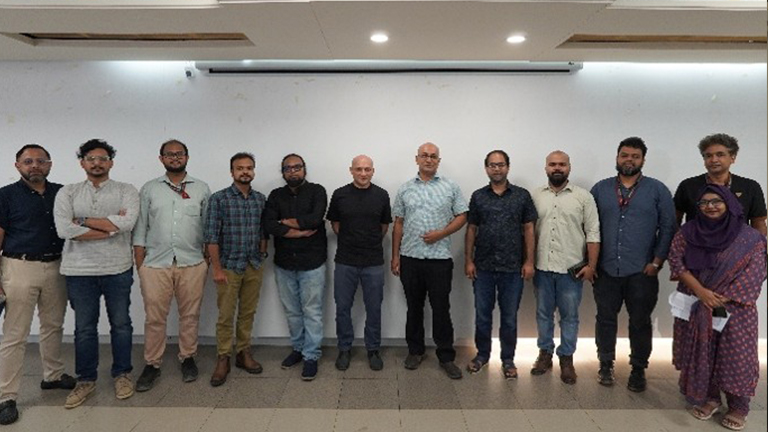
The seminar concluded with an interactive question-and-answer session, which provided students and faculty members with an opportunity to engage directly with the speaker and explore issues related to architectural practice, contextual understanding and design approaches. After the presentation, Professor Dr. G. M. A. Balayet Hossain, Head, Department of Architecture and Professor Dr. Shehzad Zahir, Convener of the Seminar and Workshop Organizing Committee presented the with a token of appreciation marking the end of a successful event. Dr. G. M. A. Balayet Hossain, Head, Department of Architecture gave the vote of thanks to the distinguished presenter and appreciated the Seminar and Workshop Organizing Committee members - Dr. Shehzad Zahir, Ar. S. M. Arafat Hossain, Ar. Zareen Jahan Khan and Ar. Rifat Bin Ali for their effort. Besides, he also appreciated the efforts of the student volunteers and the teachers and students for their active participation.
Faculty of Architecture and Planning
Ahsanullah University of Science and Technology
141 & 142, Love Road, Tejgaon Industrial Area, Dhaka-1208
Tel. (8802) 8870422, Ext. 107, 114, Fax : (8802) 8870418
Email: info@aust.edu, regr@aust.edu